Showing posts with label Music. Show all posts
Showing posts with label Music. Show all posts
Saturday, February 20, 2016


Monday, June 1, 2015
Tuesday, July 15, 2014
Priests as Prophets
Richard Pratt notes that prophets have a huge role in I and II Chronicles. They are mentioned almost forty times. One way the Chronicler emphasizes the role of the prophet in Israel is by calling the Levites prophets. Here is what Pratt says:
The Chronicler highlighted the importance of prophecy by assigning a prophetic role to many Levites. On a number of occasions he designated Levites as "prophets" and "seers" (I Chr. 25:1-5, 2 Chr. 20:14, 24:20, 29:30, 35:15). This identification appears in Chronicles more clearly than any other portion of the Old Testament. It probably reflects the conviction that the Levites, especially the musical Levites, had a prophetic role in the post-exilic community.
Wednesday, July 25, 2012
A Biblically Sound Worship Ministry
A Biblically Sound Worship Ministry


- Will
be overseen and preferably led by biblically qualified elders in the
church. By the way, the first requirement to be an elder is that they are male. This rules out female worship leaders.
- Will
make it a priority to hire a full or part-time music pastor, who could
shepherd the church through music and song. This man will be trained
theologically, pastorally, and musically. My point is that if a church has
the ability to hire more than one pastoral staff member this position
should be at the top of the list.
- Will
seek to be faithful to God’s Word in content and form.
- Will
sing God’s Word, especially the Psalms. And will constantly be searching
for more of God’s Word set to music.
- Will
study at the feet of God’s people from the past, seeking to use tradition
wisely.
- Will
not be afraid of contemporary songs or forms, but will use them wisely to
convey God’s Word to God's people.
- Will
highlight the voice of the congregation. This means most songs, after they
are learned, will be accessible to most of God’s people. It means there
should be regular singing without the aid of instruments. It means instruments should support the
people’s voices not overwhelm them.
- Will
sing songs that have a variety of tempos, moods, lengths, and themes.
- Will
express this variety using the God-given resources in the congregation.
- Will
be grateful for all they have, but will seek to use all they have to push
on to greater Biblical maturity.
Tuesday, July 24, 2012
How to Pursue Reformation in Church Music

There
are two perpetual temptations in worship. The first is to believe that older is
automatically better. The group clings to the past like it is a magic charm. To
them it is a window to better days when the church was “more pure.” There is no
maturing in the church for this group. For this group, worship music is largely
culturally defined, but the culture is an older one. The second is to assume
that newer is automatically better. The culture has moved on from “Holy, Holy,
Holy” and if the church is to reach the culture she must move on as well. There
is very little to learn from the early church for this group. For this group, worship
music is to a large degree culturally defined, but the culture is only the
newest one. Let’s be clear, while the first error does exist, it is the second
error which is the great temptation of our age. We must move on. We must be
relevant. The great sin of our age is to look old.
At
Christ Church we would like to avoid both these errors. As we pursue reformation in church music here
are some things to remember. They are not in any particular order.
- We
should be grateful for what we have. We live in an age of complainers. We
whine about everything, including church music. Yes, there is always room
for improvement. Yes, we all cringe
at certain songs. Yes, it would be nice if we had the Psalms that were not
paraphrased set to music. Yes, it would be nice if we had better contemporary
music. But God has been good to us. We have a great musical heritage from
Ambrose to Luther to Wesley. We have more and more Psalms being set to
music every year. Growth comes from
gratitude not from grumbling.
- Any
reformation in church music must be built on the foundations of love for
Christ and love for his people. If we seek reformation because we want to be “traditional” or because
we want to be “relevant” we are going to make fundamental mistakes. Love for Christ and love for the Church
form the center.
- Singing
in worship revolves around two primary things: faithfulness to God’s Word
and the voice of the people. Everything else is important, but secondary
to these two things. This is why our fathers chanted. They could chant the
Word of God exactly as it is. And chanting highlighted the voice of the
people.
- Musical
growth is dictated by God’s Word not by our current culture. That means
our primary means of evaluating our singing will be the Bible.
- We should want to thoroughly ingest the older songs and the older ways of singing. These men are our fathers in the faith. We should sit at their feet before we seek to stand on their shoulders. This does not mean we will like all their songs or methods. But it does mean that each church should seek to live within the stream of Christian tradition. No church should sing only new hymns and choruses and completely reject the older tradition. This only shows arrogance.
Wednesday, October 19, 2011
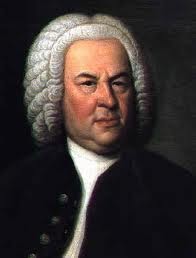
Why Bach Still Matters
Part I
Part II
Part III
Part IV
Principle #1: A worship leader should be a student of Scripture who is constantly seeking to reform their ideas, worship, and aesthetics to the Word of God. God is the standard of beauty and excellence—our worship should seek after biblical excellence and objective beauty, goodness, and truth.
Friday, March 11, 2011
Book Review: What is Worship Music?
 What Is Worship Music?: Basics of the Faith Series by Paul S. Jones
My rating: 4 of 5 stars
A brief (38 pages) introduction to some parameters for worship music. The author comes from the reformed perspective, which I agree with. He had many good points, that were clearly stated and provided food for thought as I prepare the liturgy for my church. The one thing I wish he would have addressed more clearly was the use of instruments in the service. I think the book would be helpful for anyone trying to get a general grasp on what our theological priorities should be as we worship.
View all my reviews
Subscribe to:
Posts (Atom)