Wednesday, November 30, 2011

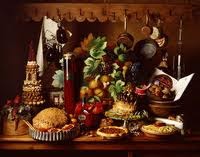
Pursuing Hospitalty: The First Five Principles

Here are the first five principles on how to practice hospitality.

First, think long and deep about God’s kindness to you. All of our actions are to flow out of who God is and what he has done for us. If your hospitality is not an act of thanksgiving to God for what he has done then it will not please him. Hospitality should come from the overflow of your life in Christ, not from guilt. Study and pray over those passages in God’s Word that describe God’s kindness to you. Matthew 22 is a good place to start. You could also read Psalm 104-106. There are numerous passages in Isaiah, such as Isaiah 2:1-5, 55, and 66:10-13. You could also read passages that talk about feasting, like Exodus 24:9-18, II Samuel 9, I Kings 8 (especially verses 65-66) and II Chronicles 30:21-27. Finally, you could read and meditate on Revelation 21-22. A theology of hospitality grounded in God's Word must be the foundation for our practice of hospitality.

Second, cultivate a love for people and the messes that come along with them. People track in mud. This mud can be real, such as spilled milk, broken furniture or clogged toilets. It can also be mud like ugly marriages, selfish hearts, immature speech and ingratitude. Without a love for people and a desire to love them in the midst of their messes we will never truly practice hospitality. Are you willing to put up with the difficulties and problems people will bring into your home? If not, then go back to the previous paragraph and review how God cares for you in the midst of your messes.

Third, work with your particular situation. We are all at different phases in our lives. To a large degree, these phases dictate how hospitable we can be. A man with six young children will not be able to practice hospitality to the same degree as a man with one child or man with children all over fifteen years old. A man who works 37 hours a week and is always home by 5 will be able to do things that a man who works 50 hours a week and travels a lot cannot. Proverbs says, “Be diligent to know the state of your flocks and attend to your herds.” (27:23) In other words, know your situation. Know what you have and what you do not have. Here are at least three things to evaluate:

1. How many children do you have and what are their ages? More children will often make frequent hospitality difficult. The reason is simple: children take time and energy. A mother who is nursing one child, with two in diapers and two more under the age of ten will have a hard time getting ready for guests. She is already practicing hospitality with her “guests.” She needs her husband’s help, which means hospitality will be more infrequent and will usually take place on the weekend. The amount of hospitality will vary from family to family. It is the husband’s job to make sure he is not overdoing it and is showing hospitality to his wife and children by considering their needs.
2. What is the husband’s job situation? How many hours is the husband working? Has he been out of town? A wife is not to lead in hospitality. That is the husband’s job. Therefore he needs to make sure that he is around to help. This will vary from home to home
3. What is the physical state of the home and the people in the home? Have the children been sick? Is the wife 8 ½ months pregnant? Has it been a long week or couple of weeks and the whole family needs a break? Sometimes the more righteous thing to do is not invite someone over.

Fourth, be hospitable. Don’t entertain. One of the great temptations with hospitality is to dazzle people. This is not what the Bible is talking about. There is a place in the Christian life for a grand feast with everyone in their best clothes. But that is not regular hospitality. Hospitality is about showing kindness, meeting the needs of your guests and making sure they are comfortable. Hospitality should be devoted, not to showing off, but to making sure your guests are at home. The food should be good, but not ostentatious. The meal and time afterward should be devoted to conversation and getting to know one another. It should be leisurely and joyful.

Fifth, go outside your normal circle of friends and peers. We all need friends. These are the people we invite over without thinking. The people we want to hang out with. This is good and we should certainly show hospitality to them. However, we also want to learn to be kind to those who are not like us. The young should invite over the old and the old the young. The family with no children should invite the one with five. The lawyer should invite the farmer. The auto mechanic should invite over the doctor. The Hispanic should invite over the Asian. We are the Body of Christ. We are not bound by race, economic status or level of education. We are bound together by the blood of Christ. Reach outside your normal group and invite someone over who you would not naturally think of inviting.

Tuesday, November 29, 2011

Why Christ Gathers the Worst of Men

I have read a lot of John Calvin. I find him to be the most consistently edifying author I spend time with. However, even Calvin can at times surprise with his depth of theological understanding, his clarity in writing and his passion for Christ.  As I studied Matthew 9:7-13, the call of Matthew, I came across a wonderful section in Calvin's commentary on what Christ came to do. Calvin was noting that Matthew was a very wicked man when Christ called him. He also noted that it surprised the Pharisees that Jesus called Matthew.  Then Calvin explains why Christ calling the most wicked of men should not shock us.

"He [Christ] came to quicken the dead, justify the guilty and condemned, to wash those who were polluted and full of uncleanness, to rescue the lost from hell, to clothe with his glory those who were covered with shame, to renew to a blessed immortality those who were debased with disgusting vices. If we consider that this was his office and the end of his coming-if we remember that this was the reason why he took upon him our flesh, why he shed his blood, why he offered the sacrifice of his death, why he descended even to hell, we will never think it strange that he should gather to salvation those who have been the worst of men, and who have been covered with a mass of crimes." (Commentary on Harmony of the Gospels, p. 402)

Monday, November 28, 2011

Pursuing Hospitality: Introduction


Hospitality is a lost art in Christian circles. Despite the priority it has in the Scriptures and the wonderful picture we paint of God as we do it, hospitality is largely ignored by the people of God. Yet it is one of the great privileges, obligations, and joys of every Christian. Christ has invited us to be guests at his table. The Lord, who made heaven and earth, is an excellent host who feeds and cares for this world. (See Psalm 104) As disciples of Christ and subjects of the Kingdom of God we are to imitate Christ by doing the same. Our tables are to be surrounded by guests. We are to wash the feet of the saints, which is a picture of hospitality. We are to entertain strangers. Paul says we are to be given to hospitality. (Romans 12:13) The word “given” means to pursue with all our heart. Hospitality is not something we get to if we can, but it is an essential part of our love for the Church and our witness to the world. I want to take this week after Thanksgiving and encourage you to practice hospitality.  Below are a few verses, which provide the Scriptural foundation for hospitality. I would encourage you to "eat these verses." We begin with what God has done for us in Christ and then move on the specific commands of Scripture.  On Wednesday and Friday I will list some practical things to consider when practicing hospitality. 

Matthew 22: 1-14 And Jesus answered and spoke to them again by parables and said: "The kingdom of heaven is like a certain king who arranged a marriage for his son, and sent out his servants to call those who were invited to the wedding; and they were not willing to come. Again, he sent out other servants, saying, 'Tell those who are invited, "See, I have prepared my dinner; my oxen and fatted cattle are killed, and all things are ready. Come to the wedding." ' But they made light of it and went their ways, one to his own farm, another to his business. And the rest seized his servants, treated them spitefully, and killed them. But when the king heard about it, he was furious. And he sent out his armies, destroyed those murderers, and burned up their city.

Then he said to his servants, 'The wedding is ready, but those who were invited were not worthy. Therefore go into the highways, and as many as you find, invite to the wedding.' So those servants went out into the highways and gathered together all whom they found, both bad and good. And the wedding hall was filled with guests.

"But when the king came in to see the guests, he saw a man there who did not have on a wedding garment. So he said to him, 'Friend, how did you come in here without a wedding garment?' And he was speechless. Then the king said to the servants, 'Bind him hand and foot, take him away, and cast him into outer darkness; there will be weeping and gnashing of teeth.' "For many are called, but few are chosen."

Romans 12:9-13 Let love be without hypocrisy. Abhor what is evil. Cling to what is good. Be kindly affectionate to one another with brotherly love, in honor giving preference to one another; not lagging in diligence, fervent in spirit, serving the Lord; rejoicing in hope, patient in tribulation, continuing steadfastly in prayer; distributing to the needs of the saints, given to hospitality.

I Peter 4:9 Be hospitable to one another without grumbling.

Hebrews 13:2 Do not forget to entertain strangers, for by so doing some have unwittingly entertained angels.

I Timothy 5:9-10 Do not let a widow under sixty years old be taken into the number, and not unless she has been the wife of one man, well reported for good works: if she has brought up children, if she has lodged strangers, if she has washed the saints' feet, if she has relieved the afflicted, if she has diligently followed every good work.

I Timothy 3:2 A bishop then must be blameless, the husband of one wife, temperate, sober-minded, of good behavior, hospitable, able to teach.

Wednesday, November 23, 2011

Whose Work Is It?

"The baptismal rite of Basel makes one thing clear above all: baptism is in the end a work of God. The minister, as the apostles before him, administers the sign of washing, but it is God who through his Holy Spirit cleanses the heart. One might say that the service underlines the epicletic nature of baptism.  Having begun the service with the affirmation that our salvation is in the power of God alone, "Our help is in the name of the Lord," the minister calls the church to prayer.  We are reminded that our part is to pray for the salvation of the child.  It is God's part to give the child faith and by the inner baptism of the Holy Spirit to regenerate him. The power to save remains with God, who works when and where and how he pleases.  The power is not in our hands.  It resides not in the proper performing of liturigical rites.  This was one of the essential insights of Reformed theologians.  Our part is to administer obediently the sign God has given, to proclaim the rich promises of grace, to call on God to fulfill these promises, and to trust that he will fufill them...If it is true that God's Spirit works when and where and how he pleases, it is equally true that God works where he has promised to work.  That was the heart of the theology of the covenant." (Hughes Oliphant Old, The Shaping of the Reformed Baptismal Ritep. 72-73)

Monday, November 21, 2011

Not Magic, But a Sign

"We have taught that those baptized in the Lord Jesus are made one body with him in his death, and through baptism they die with him and are buried with him and in his Resurrection they rise to new life.  Therefore, the true use or observance of baptism is that we regularly die to the old Adam and this kind of dying we must do as long as life shall last." (Wolfgang Capito, A reformer who worked alongside Martin Bucer in Strasbourg)

"Capito makes a point here which is essential to understanding the further development of the Reformed rite of baptism.  Baptism is not a ritual which saves one as if by magic at a particular time or occasion. It is not as though before one is baptized one is lost and after baptism one is saved. Baptism is far more a sign under which the Christian lives out the whole of life. It is a sign of continual washing from sins and a continual renewal in new life. It is not so much the ritual of a once-and-for-all crisis experience as it is a prophetic promise of what is and always will be the character of the Christian life." (Hughes Oliphant Old, commenting on the above quote in The Shaping of the Reformed Baptismal Rite, p. 52)

Thursday, November 17, 2011

Baptism Belongs at the Beginning

"In the fourth century one had to prove one's faith before being baptized.  One had to undergo a long and often rigorous scrutiny.  Few people were baptized at the beginning of their Christian life.  That was very different from the practice of the New Testament Church." (Hughes Oliphant Old, The Shaping of the Reformed Baptismal Rite in the Sixteenth Century, p. 31)

Tuesday, November 15, 2011

Take Up and Read: Tuesday Edition

Here are some links that I have found helpful so far this week.

We tend to make reading and applying the Scriptures more complicated than it needs to be. Justin Taylor quotes J.I. Packer and Gerald Bray on the three questions we should ask as we read the Bible.

Since I am a CRE pastor, I have enjoyed Doug Wilson's series of posts on what to expect when you visit a CRE church. Here he gives a brief defense of using various postures in worship. Here he discusses covenant renewal worship, which is the way CRE churches structure their worship services. 

If you are interested in my denomination you can go to crechurches.org.

Monday, November 14, 2011

Do Not Amend!

God alone may exercise the perogative to amend his Word. In other words, Christians may not arbitrarily declare any portion of God's Word void, including any portion of the Old Testament.  Any claim of change between the old covenant and the new covenant must be validated by further revelation of God as found in the Scriptures themselves.  We have one Bible, not two.  Both the Old and New Testaments are to direct the belief and practice of the new covenant believer.  We might as well sever a tree from its roots and expect it to survive, as to sever the old covenant from the new.  The Old and New Testaments are tied together and interdependent.  The Old Testament needs the New Testament, and the New Testament needs teh Old Testament, to be properly interpreted and understood.  Pastor Randy Booth

Friday, November 11, 2011

Book Review: To You and Your Children

To You and Your Children: Examining the Biblical Doctrine of Covenant SuccessionTo You and Your Children: Examining the Biblical Doctrine of Covenant Succession by Benjamin K. Wikner
My rating: 5 of 5 stars

Not all essays in here are 5 stars, but most of them are very good, especially if someone is trying to get a big picture view of covenant succession. The essays that had the most impact on me were Robert Rayburns' on the Promise of Grace, Nelson Kloosterman's on Proverbs 22:6, Tim Bayly's on the Emasculation of the church, and Randy Booth's on how to pick up the pieces when parenting has gone wrong. It is odd that a lot of times books like these are accused of producing parents who presume upon God. My response to this book was gratitude for God's grace in covering my sin and gratitude for God's Spirit to guide me as I parent my children.

View all my reviews

Tuesday, November 8, 2011

Book Review: The Christian Imagination

The Christian Imagination: The Practice of Faith in Literature and Writing (Writers' Palette Book)The Christian Imagination: The Practice of Faith in Literature and Writing by Leland Ryken
My rating: 5 of 5 stars

I really enjoyed this book. Not every essay was great, but a lot of them were. The best part was the variety. There were long articles, short articles and lists of quotes. There were older writers and newer ones. There were articles on reading, writing, poetry, movies, fantasy, realism and why reading is such fun. There were various types of Protestants, as well as Roman Catholics. Some of the authors included were Francis Schaeffer, George MacDonald, C.S. Lewis, J.R.R. Tolkien, Wendell Berry, Gene Veith, Leland Ryken, G.K. Chesterton and Madeleine L'Engle. In short, the book was a feast of a wonderful variety of essays by a variety of people on a variety of topics.

The articles I found most helpful were the ones on evil in Christian writing. There were two in particular that were helpful in sorting out this thorny issue. Susan Wise Bauer wrote an essay called "Three Faces of Moral Evil: Christian Writers and the Portrayal of Moral Evil." She compares three different views of evil using Stephen King as foil for one type. Also,a professor from Doane College, Richard Terrell, wrote an essay entitled "Christian Fiction: Piety Is Not Enough." Both of these laid some groundwork for how to include sin and evil in Christian writing. Brian Godawa's essay on the movies also addressed this issue.

I also really enjoyed Frederick Buechner essay "The Gospel as Fairy Tale" and Peter Leithart's essay on the reader humbling himself before writer.

A good book to help fire the imagination and to get the Christian to think through how to use the imagination in a way the glorifies God.

View all my reviews

Thursday, November 3, 2011

Take Up and Read: Thursday Edition

Here are some links I enjoyed this past week.

Kevin DeYoung laments that many Christian single women cannot find good Christian men.  He also cautions Christian women to not have too high standards so that most men are excluded.

I always find Pastor Randy Booth edifying. For many Christians attendance at church is important, but not necessary. Pastor Booth has begun a series of posts on why church attendance is necessary as Christians. Here are the first three: post 1, post 2 and post 3.

Toby Sumpter has an article up at Credenda on All Hallows Eve. He has good thoughts on how our approach to God's holiness changes from the Old Testament to the New Testament.

Finally, here is a good word from Mrs. Nancy Wilson for wives and mothers. While I would not necessarily agree that a woman should work outside the home prior to marriage, if they do Mrs. Wilson's perspective is the only Biblical one to have. And most importantly this is a good word for all those wives and mothers who feel like "weirdos."
Let the saints be joyful in glory, let them sing aloud on their beds, let the high praises of God be in their mouth, and a two edged sword in their hand, to execute vengeance on the nations, and punishments on the peoples; to bind the kings with chains and their nobles with fetters of iron. Psalm 149:5-8