Friday, October 28, 2011

Take Up and Read: Reformation Sunday Edition

Here are some links I enjoyed as Reformation Sunday approaches.

George Grant lists his favorite Martin Luther quotes. I would have enjoyed at least one quote with some spicy language. But the ones listed are very good.

Steven Lawson has been doing a series of blog posts at Ligonier about various reformers. Here are the posts on John Calvin, Heinrich Bullinger, William Tyndale, Ulrich Zwingli and Martin Luther

At christianaudio.com you can get Martin Luther in his own words for free this week. For those of you who only know Luther because you have heard about him or sung "A Mighty Fortress" this book would be a good introduction to some of his thinking.

Also at Ligonier you can download for free R.C. Sproul's new book for children entitled "The Barber Who Wanted to Pray." It tells the story of why Luther wrote his classic on prayer called "A Simple Way to Pray."

Finally, one of the great contributions of the reformers was on the subject of justification by faith. Uri Brito, a pastor in Florida, has posted some thoughts by Peter Leithart on what justification is.

Soli Deo Gloria

Thursday, October 27, 2011

Book Review: The Shaping of the Reformed Baptismal Rite

The Shaping of the Reformed Baptismal Rite in the Sixteenth CenturyThe Shaping of the Reformed Baptismal Rite in the Sixteenth Century by Hughes Oliphant Old
My rating: 5 of 5 stars

Very, very good. I loved this book, even though I couldn't translate all the German or Latin. There are two things I love about H. Old's writing.

First, he always tells you less than he knows. When you read him there are paragraphs which are little glimpses into the history of a subject or a person. You know that there are large amounts of information he left out. You wish you could sit down with him and have him expand on those paragraphs.

Second, he teaches theology through history. You think you are reading history, but when you are done your theology has morphed. He doesn't do this in an underhanded way. He simply shows how what men do and do not do in history flow from their theology. This book was superb in explaining that the reformers theology of baptism flowed directly from their theology of grace.

Two topics I enjoyed from this book. First, he explained how the Anabaptist opposition helped clarify the reformers' position. Second, I enjoyed the different types of baptismal prayers he quoted.

My theology and practice of baptism was clarified by this book. I am very grateful for H. Old's labors and scholarship. He has wielded a tremendous influence on my view of liturgy, sacraments and the Church.

View all my reviews

Thursday, October 20, 2011

Take Up and Read: Thursday Edition

Here are some links worth reading:

Trevin Wax describes how he wishes an interview about homosexuality would go. It is not perfect, but it is better than what you usually get. If you want to see how these interviews usually go see Al Mohler's dissection of Joel Osteen's interview with Piers Morgan.

Here is a good article by Mary Kassian on why gender-inclusive Bibles, including the new NIV, are bad for women and the Church.

Douglas Wilson has some short posts on what you can expect to find at a CRE church. Here is post 1 and post 2. 

Here is why Tim Keller is slowly, but surely, losing my respect. I know it is not him presiding over the wedding service. But to have a woman officiating at wedding ceremony for your church in ministerial garb is a clear sign that compromise has occurred.  A picture is worth a thousand words.

Finally a good short word by Pastor Randy Booth on how falling off a cliff usually begins with small excuses and compromises.

Wednesday, October 19, 2011

Book Review: Biblical Eldership

Biblical Eldership: An Urgent Call to Restore Biblical Church LeadershipBiblical Eldership: An Urgent Call to Restore Biblical Church Leadership by Alexander Strauch
My rating: 4 of 5 stars

An excellent basic overview of the office of elder. The strength of the book is the exegesis of various passages, such as I Timothy 3, 5 and Titus 1 on the office of elder. I also appreciated his sections on Acts 15, James 5:13-18 and Hebrews 13:17. I did not necessarily agree with all his conclusions, but his work on these passages provided a lot of food for thought. I would recommend it to anyone interested in being an elder.

I had two questions that he did not answer well. First, how much of Paul's ministry is paradigmatic for the elder? For example, I and II Corinthians contain several passages describing Paul's ministry. Do these passages have anything to say to the elder? Strauch did not answer this question very clearly. The reason I bring it up is because if Paul's ministry is a paradigm for an elder then it would seem to imply two types of elders or two offices (minister of the Word and ruling elder). Normally, a ruling elder who works a job 40-50 hours a week cannot be doing what Paul did.

Second, how much of Paul's instructions to Timothy and Titus, outside of the passages specifically about elders, apply to elders? Here I am asking the same question as the one above. If Timothy and Titus are paradigms for elders then there would appear to be two offices or at least two very different duties within the same office. A man who works 40-50 hours and is a ruling elder on the side is going to have a difficult time using Timothy or Titus as a paradigm. Some of this is implied in I Timothy 5:17-18.

My point is that whether you call a position "Three office" or not, if you use Paul, Timothy and Titus as your paradigm there is going to be at the very least a functional difference between the man who devotes himself full time to the ministry and the ruling elder. I do not think Strauch addressed this issue very carefully or clearly. By focusing on the passages that just specifically address elders, he left a lot of relevant passages on the cutting room floor.

View all my reviews

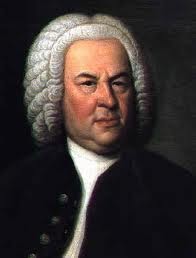
Why Bach Still Matters

Here are four good posts from Greg Wilbur on what the church can learn from Johann Sebastian Bach. Below the posts are ten principles Wilbur derived from studying Bach. If you want a book length treatment of Bach's life you can read Wilbur's book Glory and Honor.

Part I
Part II

Part III
Part IV

Principle #1: A worship leader should be a student of Scripture who is constantly seeking to reform their ideas, worship, and aesthetics to the Word of God. God is the standard of beauty and excellence—our worship should seek after biblical excellence and objective beauty, goodness, and truth.

Tuesday, October 18, 2011

Fighting Sexual Immorality

Proverbs considers sexual immorality one of the greatest temptations facing men. It is addressed early and often in the book. Here are some quick thoughts I gleaned on how to fight sexual immorality from a recent reading of Proverbs 5.
1. Remember that sexual immorality is trading a temporary pleasure for a permanent pain. (verses 1-6)

2. Remember that sexual immorality wastes your energy, money, and time. (verses 9-11).

3. Remember that sexual immorality will ruin your reputation. (vss. 12-14) The man who refuses to listen to instruction and consistently indulges in immoral acts will find himself on the edge of total ruin. He will be publically recognized as a fool.

4. Remember to enjoy your wife or wait for your future wife. (vss. 15-20)

5. Remember that God sees you when are sinning. (vss. 21-23) It is easy to believe that we are on our own , that no one sees us. But God’s eyes are always watching.

Friday, October 14, 2011

The Christian and His Possessions

When I finished preaching Matthew 6:19-34 a few weeks ago, I decided to put down some of the basic biblical principles for handling possessions and money. These are not comprehensive, but give a basic biblical framework for how we should think about our money and possessions. Most of the principles come from Matthew 6:19-34 and I Timothy 6:6-10, 17-19. I would encourage you to read the passages before looking at the points below.

1. God is our Father. He loves us and will care for us. Therefore we should not worry. If he chooses to remove some of our possessions, it is for our good. This should also lead us to pray for our needs.

2. We will die. Therefore we need to make sure our possessions are being used to store up treasure in heaven.

 3. We should earn our money through honest, hard work that does not take advantage of the poor and weak.

4. Our possessions are gifts from God, even those possessions we have worked hard for. Possessions and work are part of God’s grace to us.

5. We are stewards of our possessions. A steward was someone left in charge of a house while the master was away. Jesus uses this model in Matthew 25:14-30. Paul also uses a similar idea in passages like Colossians 3:23-25. We will answer to our master with how we use our time, money and possessions.

 6. Wealth is not a vice or a virtue.

7. Poverty is not a vice or a virtue.

8. Both wealth and poverty come with temptations. When one is rich they tend to forget God and become proud. When one is poor they tend to doubt Him and grumble against him, often taking matters into their own hands. (See Proverbs 30:7-9) God is to be honored with our possessions, whether we are rich or poor. We are to trust in him and be generous with what he has given to us.

9. God wants us to enjoy our possessions. We should not feel guilty about what we own or about enjoying it. This does not mean we are selfish gluttons or live in luxury. It does mean we are to eat our food, drink our beer, sleep in our beds, read our books, play in our yards, and drive our cars with thankfulness and joy.

10. Those who are rich in this world are expected to be rich in good works. To whom much is given, much is required. The wealthiest Christians should be the ones doing the most good deeds. But these good deeds should be hidden, not paraded before men. (See Matthew 6:1-4)

11. Christians should be known for their contentment. We should not be proud when we have a lot. Nor should we disturbed when God removes some of our possessions from us. We should be content in all circumstances. (Philippians 4:11-13) In a world that always wants more, contentment is great witness.

12. The desire to be wealthy is sin. We should work hard, plan wisely and let God build our bank account as he sees fit. Proverbs 27:20 says, “The eyes are never satisfied.” You will not be satisfied when you get what you want, so be content with what you have.

13. A love of money can destroy someone’s faith and plunge them to ruin. (See I Timothy 6:9-10) We often joke about greed, but in the Scriptures it is a terrible sin. Greed can choke the spiritual life out of a man and send him to Hell.

Thursday, October 13, 2011

Take Up and Read: Thursday Edition

Here are some links worth reading.

Here is a brief exhortation from Kevin DeYoung on the theological foundations for mercy ministries, as well as some mistakes people make when trying to do mercy ministries. The mistakes are worth reading carefully. I especially appreciate numbers 3, 4 and 13. More could be said, but this is good food for thought.

Dr. Leithart has some blog posts on how the U.S.'s involvement in the Middle East has led to less Christians in the area not more. It is noted that neither George W. Bush, nor President Obama seem to care.  Here is post 1 and post 2.

Finally, Pastor Doug Wilson has done an excellent series of short videos on work. With all the protests on Wall Street these are worth watching to get a biblical perspective on work. 
Let the saints be joyful in glory, let them sing aloud on their beds, let the high praises of God be in their mouth, and a two edged sword in their hand, to execute vengeance on the nations, and punishments on the peoples; to bind the kings with chains and their nobles with fetters of iron. Psalm 149:5-8